Most cave paintings were created during the Paleolithic period (40,000 BC - 10,000 BC) and were discovered in the 1860's (source). Since the early humans didn't have freeway underpasses and train cars yet, they unleashed their vandalizing self-expression on caves. Cave paintings often depict hunting scenes, giving us glimpses of a time when woolly mammoths and other prehistoric creatures still roamed.

That's pretty neat.
Cuneiform
Cuneiform is considered the earliest writing system, developed around 3,400 BC. And if the history of writing really interests you, here's lots more info. It evolved from simple record keeping into a full blown writing system capable of transmitting messages. If you could decipher the 1,000+ unique characters, that is. This is a letter from a high priest to a king:
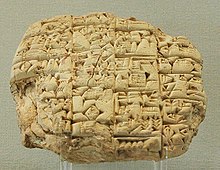
The postage on that thing must have been ridiculous.
This website is a free English to Cuneiform translator. I gave it a try:
Your entered text was :
mariah is doing a great job so far
In the Babylonian Cuneiform Alphabet this is written as :


Smoke Signals - Old World Instant Messaging
"Now all of China knows you're here." Pretty effective.
Disney's Mulan got it right with this depiction of the Great Wall's security alarm. Smoke signals and signal fires are one of the oldest forms of communication. Polybius, a Greek historian, created a alphabet by holding up different combinations of torches, giving him the ability to convey complex messages. Unfortunately, the system itself was rather complex as well, making it difficult to use. The most recognizable use of smoke signals today is the Catholic conclave. Black smoke tells the expectant crowd that a pope hasn't been chosen yet, while white smoke indicates that they found the right guy.
The Iliad and The Odyssey are two of the most well-known stories in the world and they mark the beginning of Western literature. The Greek poet, Homer, used to recite these epics from memory and they were written down around 800 BC (source). They have had an enormous cultural impact and The Odyssey has become a story archetype, like in the Coen Brothers' film O Brother, Where Art Thou?
Interesting side note: The name Odysseus means "man of sorrows."
Fireworks!
To learn about the awesome origin of fireworks, check out my other blog post.
Rosetta Stone - Code Breaker
The Rosetta Stone is a hunk of black granite that is inscribed with Egyptian hieroglyphics, Demotic script, and Ancient Greek. Rediscovered in 1799, it provided the key to understanding Ancient Egyptian hieroglyphics (source). Today, Rosetta Stone is also a line of popular language learning software.

Go get 'em, tiger.
In the year 496, Pope Gelasius I issued the Decretum Gelasianum, a list of "books to be received and not to be received." His reign could be described as a kind of papal power-trip. Though the Decretum refers to the Scripture, it is still the first known example of writings being purposefully withheld from the public.

No comments:
Post a Comment